

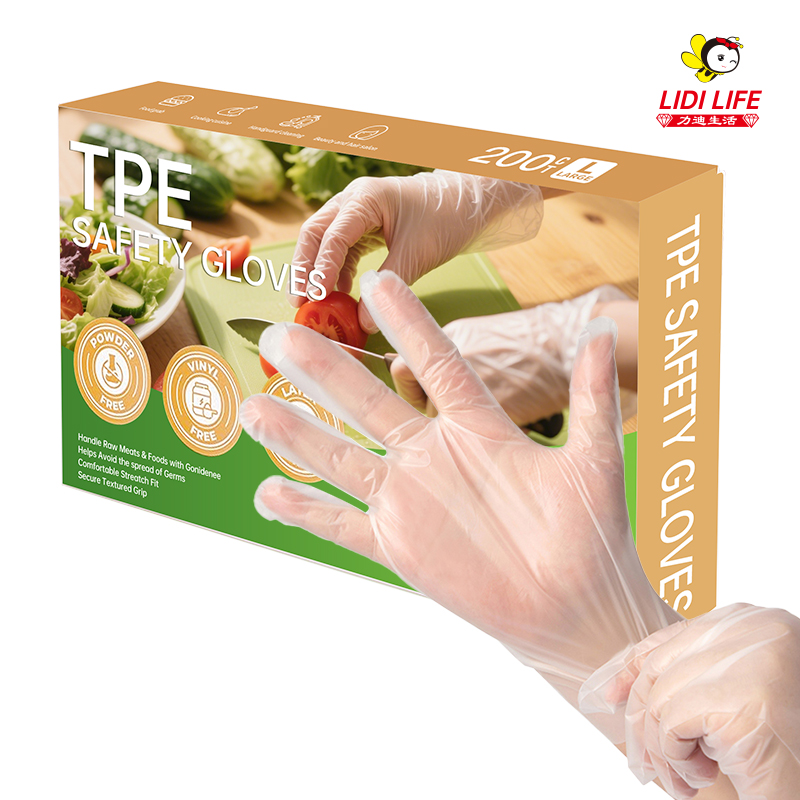
It was a winter night in Toronto, 11 PM. Emily had just finished a meeting with a grocery chain. The light from her computer screen illuminated her tired face. The supermarket had tasked her with finding a glove for their fresh food section—it had to be safe, eco-friendly, durable, and comfortable enough for staff to wear all day. Traditional latex gloves caused allergies for some employees, while standard PE gloves were too slippery and prone to tearing. She opened Google and typed: "TPE gloves food safety, eco-friendly, comfortable."
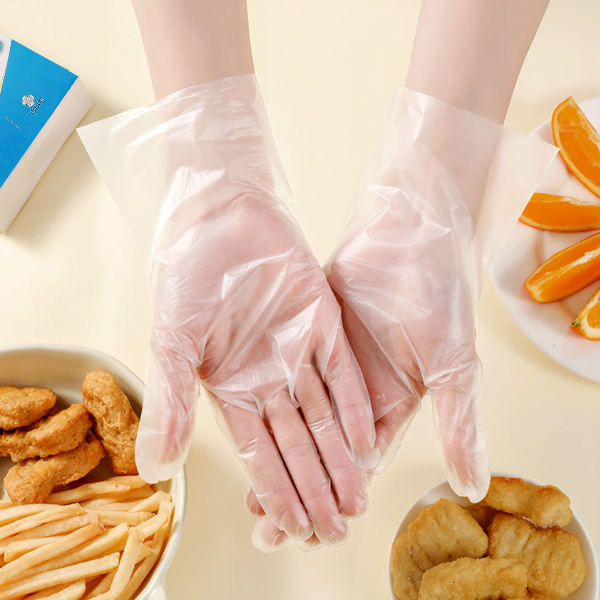
On the third page of search results, a clean, straightforward website caught her eye: "Worldlidi.com." The site wasn't flashy, but it clearly displayed its categories: disposable gloves, PE gloves, TPE gloves, TPU gloves, long-cuff PE gloves. Each type was labeled with certifications and use cases. She was particularly drawn to the description for TPE gloves: "A feel like a second skin." That was exactly the phrase she was looking for.
Chapter 2: A Conversation Across Time Zones
When Emily submitted her inquiry, it was morning in Xiamen, on the other side of the world. David Chen, Sales Manager at Xiamen Lidi Plastic Co., Ltd., was just starting his day. He received a system alert: "New inquiry from Canada—need TPE gloves for food handling, require high sensitivity and eco-friendly materials."
David didn't send a quote immediately. He first studied Emily's company website and found they supplied consumables to North American supermarkets. "Supermarket employees change gloves dozens of times a day," he thought to himself. "Comfort and donning speed are critical."
He replied with an email containing no attachments, just a few thoughtful questions:
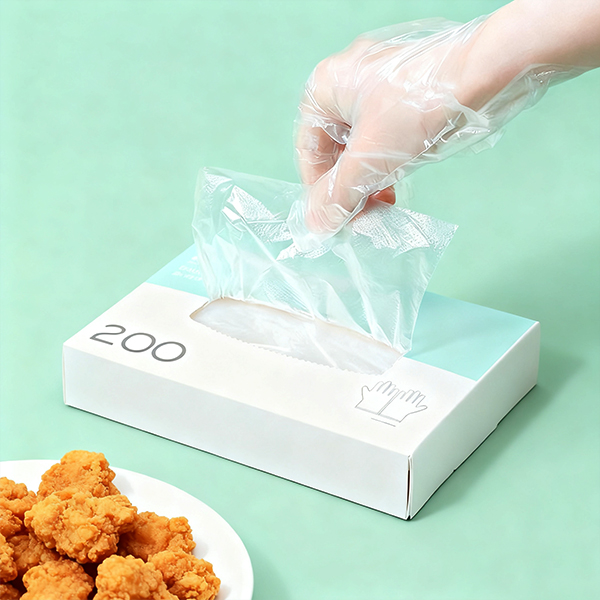
"Do your staff need to change gloves every hour? If so, our TPE gloves feature a quick-donning design."
"Are they handling chilled or ambient-temperature food? We offer different thicknesses."
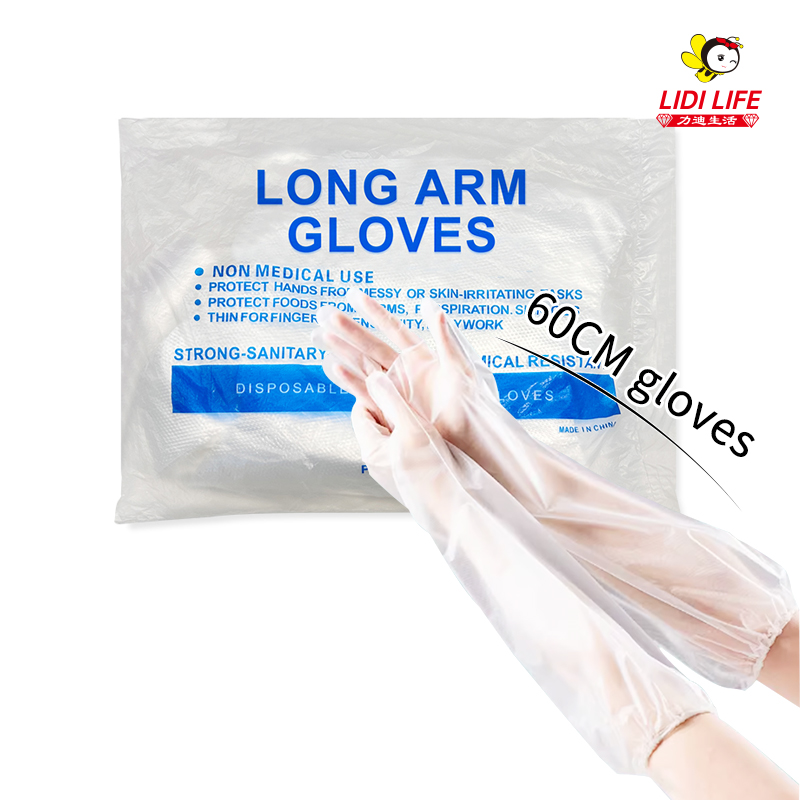
"Have you considered long-cuff PE gloves for cleaning tasks?"
Chapter 3: Samples Crossing the Pacific
Emily was surprised—this supplier was asking about her actual challenges. She replied with detailed requirements: "Our staff need to don gloves within 30 seconds, with enough tactile sensitivity to distinguish between a coin and a piece of raw meat..."
Three days later, David sent an "experience package":
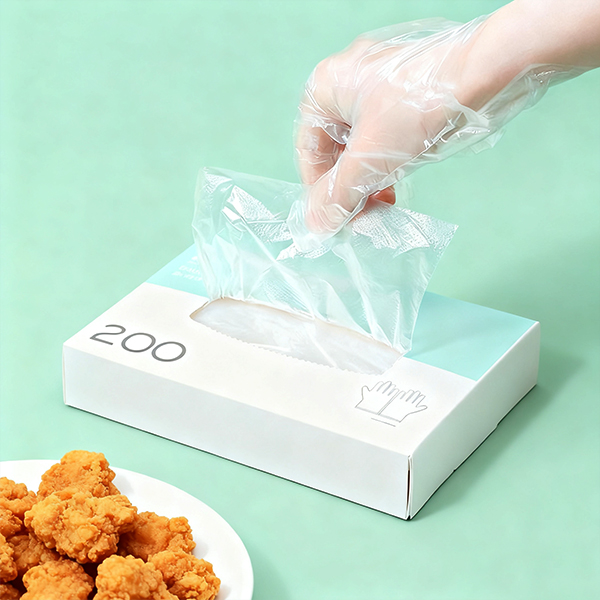
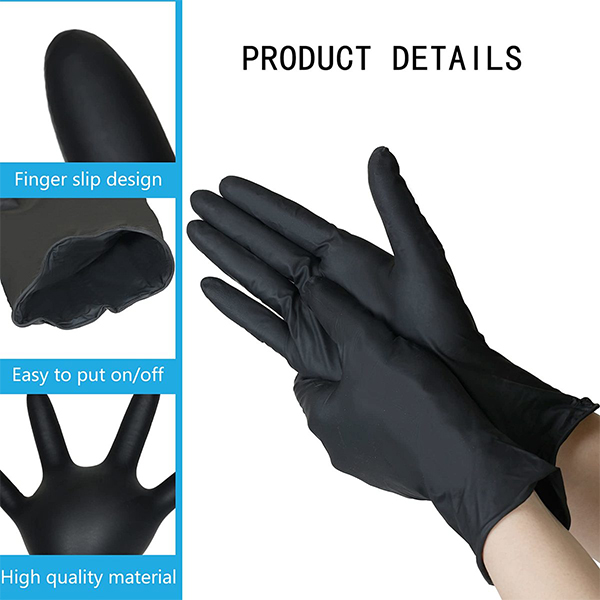
Three pairs of TPE gloves in different thicknesses (thin, medium, thick), each labeled with a suggested use case: "produce sorting / meat handling / cleaning"
A comparison sample: a standard PE glove for the left hand and a TPE glove for the right, with a card reading "Feel the difference in warmth"
A link to a short video showing a seasoned worker tying a perfect bow in 5 seconds while wearing the glove—demonstrating its dexterity
The package also contained a handwritten note: "Emily, I thought you might like to know—the material in our TPE gloves biodegrades 90% in soil within 24 months. You're protecting your employees' hands and our planet's tomorrow."
Chapter 4: The Warmth Test
Emily took the samples to the supermarket. Juan, a veteran with twenty years in the seafood section, tried them on and his eyes lit up. "With these gloves, I can feel the texture of fish scales. Before, I had to take my gloves off to check the gills. Not anymore."
A younger employee said, "My hands used to get clammy and pale by the end of the day with regular disposable gloves. These let my skin breathe."
But Emily still had a concern: "In our chilled section, it's 4°C in the winter. Will the gloves stiffen?"
The next morning at 5 AM Toronto time, she received a video from David. It showed a lab in Xiamen: a hand wearing a TPE glove was lifting an extremely thin slice of lemon from ice water, the movement precise and steady. Captions read: "At 4°C, 87% tactile sensitivity retained."
Chapter 5: Building Trust
What truly moved Emily was a comparison report David proactively sent:
PE gloves: Economical, but less elastic. Suitable for short, simple tasks.
TPU gloves: High chemical resistance, but higher cost. Ideal for industrial settings.
TPE gloves: The balanced choice—"like a breathable cotton undershirt for your hands."
Long-cuff PE gloves: Designed for cleaning, preventing water from running into sleeves.
"I don't just want to sell you gloves," David wrote. "I want to help you find the pair that fits your needs best."
When Emily asked about the minimum order quantity, David's response surprised her again: "Normally, it's one container. But if you'd like to test with just a few pallets first, we can arrange a shared container. What matters most is that you and your team are satisfied."
Chapter 6: A Smile from Thousands of Kilometers Away
Today, the fresh food sections of twelve supermarket chains in Toronto use TPE gloves from Xiamen Lidi Plastic Co., Ltd.. Juan says, "These gloves remember the shape of your hand." During new employee training, Emily says, "Put them on. Feel the temperature of the food. That's our commitment to quality."
During a video call, Emily once asked David, "Do the workers in your factory wear the gloves you make?"
David flipped his camera. On the production line, every worker wore their own TPE gloves. "We believe in what we make," he smiled. "Just like a baker eats their own bread."
Chapter 7: Beyond the Glove
In a recent order, Emily added long-cuff PE gloves for deep cleaning. David, in turn, recommended an upgraded TPE glove formula with subtle anti-slip texture on the fingertips—an idea inspired by Emily's feedback about "handling slippery salmon."
"A good supplier is like a good glove," Emily wrote in her year-end report. "It doesn't constantly demand your attention. It simply fits your needs, providing just the right protection when you need it."
A Message from Xiamen Lidi Plastic Co., Ltd.:
Behind every pair of disposable gloves is a pair of hands that deserve respect and protection. Whether it's a chef in a food plant, a researcher in a lab, or a worker on an assembly line, their comfort and safety are the starting point for developing every PE glove, TPE glove, TPU glove, and long-cuff PE glove.
We don't just manufacture gloves. We care about:
The finger dexterity of the sushi chef who dons gloves 300 times a day
The "zero-interference" tactile sensitivity needed by lab technicians handling delicate samples
The peace of mind long-cuff PE gloves provide for cleaning staff
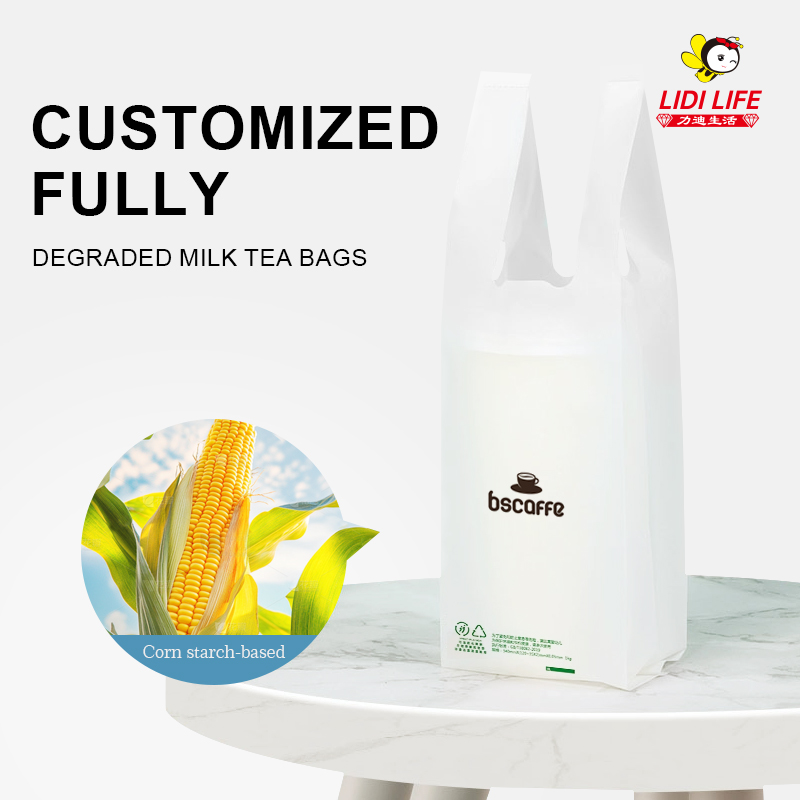
Our planet's need for more biodegradable options like our TPE gloves